

Real Help for Managing Depression: What Your Options Actually Look Like
- TTYT
- Oct 15, 2025
- 3 min read
Depression can make everything feel heavier than it should. Even searching for help can feel overwhelming or confusing. If you have been trying to figure out what kind of support might make a real difference, you are not alone. There are practical, accessible ways to find help for managing depression that fit your life, your energy level, and your comfort.
This guide breaks down what real support can look like and how to take the first step without feeling lost.

What Effective Help for Managing Depression Looks Like
When you feel stuck in the fog of depression, even reaching out can feel impossible. Help does not need to be complicated. It can start with small moments of support that make your days feel less heavy.
Effective help often includes:
Connection: Feeling seen and heard by someone who understands
Practical tools: Strategies you can use in daily life
Consistency: Regular support that builds momentum
Flexibility: Options that match your comfort and lifestyle
There is no single right way to get help. There is only the way that works for you.
Different Ways to Find Help for Managing Depression
You have options, and each one serves a different purpose. Choose whatever feels most doable right now.
1. Talking to Someone You Trust
Opening up to someone who listens without judgment can be a powerful first step. You do not have to explain everything or make it sound perfect.
Try this:
• Choose someone who gives you space to talk
• Be honest about how you feel, even if it is messy
• Share only what feels manageable
Small conversations can shift how heavy things feel.
2. Professional Support
A therapist can help you understand what is happening and offer strategies tailored to your needs. You do not need to wait until things feel unbearable to reach out.
Supportive options include:
• Working with a therapist who specializes in depression
• Online therapy if leaving home feels hard
• Trying a few sessions before deciding if the fit is right
If you need structured support, visit our page on depression therapy to explore what this can look like.
3. Self Help Tools and Resources
These are small, practical tools you can use on your own time.
Examples include:
• Journaling to notice mood changes
• Mindfulness exercises to help you stay grounded
• Breathing techniques to calm an overwhelmed nervous system
These tools do not replace therapy, but they can complement it.
If you are looking for more insight into why your body reacts the way it does, you may find this post helpful: Why you cannot calm down even when you try
4. Gentle Lifestyle Adjustments
Depression is not a choice. You cannot “snap out of it.” But small shifts can support your nervous system.
Consider:
• Short walks or small movements
• Nourishing meals
• Protecting your sleep as much as possible
Think of these as supports, not solutions.
5. Peer Support Groups
Hearing other people’s experiences can help you feel less alone. Groups can offer validation, coping strategies, and a sense of community.
Try a virtual or local group and engage at your own pace.
How to Know What Type of Help You Need
It is normal to feel unsure. You can start by asking:
• What feels doable today
• Whether you prefer talking or working on your own
• What barriers might get in the way
• What has helped in the past
You do not need to pick the perfect option. You just need a starting point.
If you want more clarity about how depression and anxiety overlap, this post may help: Why personalized psychotherapy helps with anxiety and depression
Simple First Steps You Can Take Today
If you want to begin but do not know where to start, try one of these:
• Reach out to someone safe
• Schedule a therapy session
• Download a mental health app
• Try one grounding exercise
• Choose one small change for this week
You deserve support that meets you where you are.
If you want personalized guidance, you can take our quick therapist matching quiz to find someone who fits your needs and comfort level.
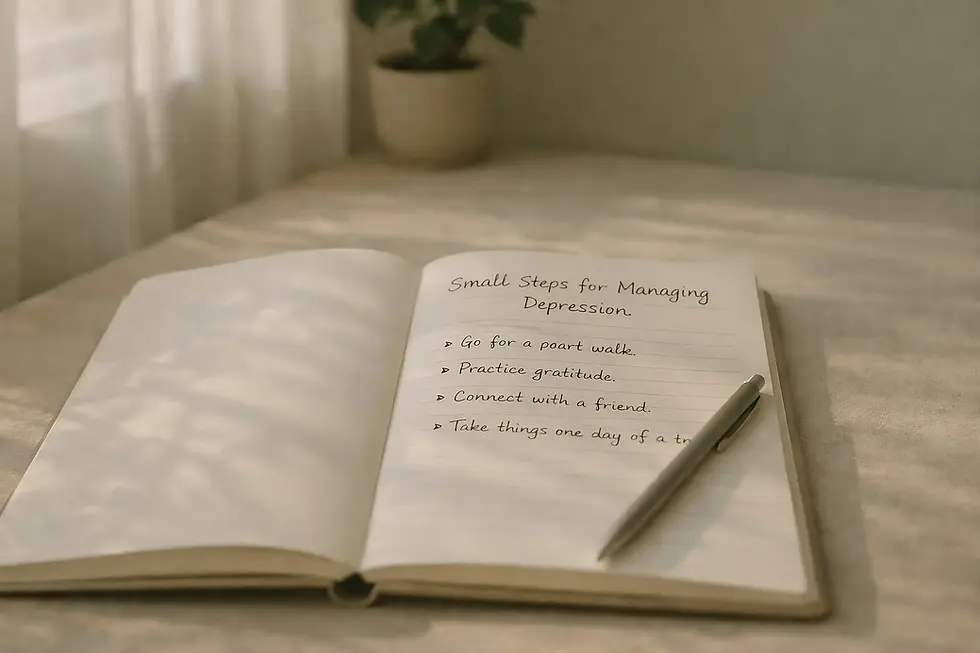
Moving Forward with Compassion for Yourself
Healing is not linear. You will have better days and harder days. Progress is not about doing it perfectly. It is about continuing to show up for yourself in small, manageable ways.
Try to remember:
• Your feelings are valid
• You deserve support and compassion
• Resting is not failure
• You do not have to carry this alone
When you feel ready, you can book a therapy session and take the next step toward feeling understood and supported.


Comments